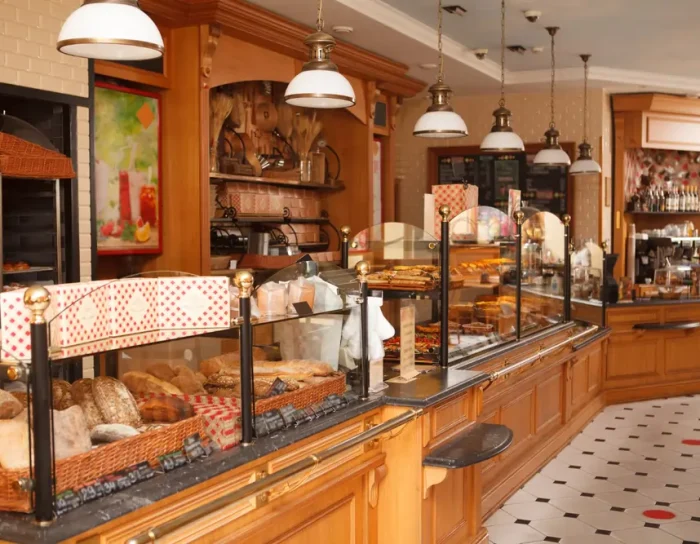
Specialty Bakery Fit-Out, Battersea Power Station, Turbine Hall B, London
Case Study 12:
Specialty Bakery Fit-Out, Battersea Power Station, Turbine Hall B, London
Sector: Café and bakery
Location: London, England
Size: 90 m²
Status: Completed Q3 2024
Project overview
InnoDez UK delivered a fast-track MEP engineering and energy upgrade for a 90 m² specialty bakery inside Battersea Power Station, Turbine Hall B. Within strict heritage and landlord criteria, the team produced coordinated Mechanical, Electrical and Plumbing design and engineering that controls odour, heat and noise, protects the listed fabric, and keeps customer areas comfortable through peak service.
Brief
Provide robust kitchen extract with multi stage abatement, stable temperatures at the serving edge without draughts, and quiet operation that respects neighbouring units and residences above. Keep all services concealed from key sightlines, route to designated risers only, and hand over simple controls plus sub-metering so the operator can track baseload and after-hours drift.
Our scope
Mechanical: Heat pump VRF with heat recovery. Dedicated outdoor air system with energy recovery and CO₂-based demand control, sized to occupancy profile. Tempered make-up air to the bake line to hold a slight local negative pressure and prevent odour escape. Low velocity linear slots at the counter, returns via concealed shadow gaps.
Kitchen extract and odour control: Acoustic lined canopy extract with ESP, UV and deep-bed carbon in a lined riser. Discharge via landlord riser to roof, certified to centre emission limits.
Plumbing: New hot and cold services, point-of-use heater for hand-wash, backflow protection to risk category, trapped floor gullies in wet zones, condensate routing to accessible points. Compact grease interceptor sized to British guidance with clear maintenance access.
Electrical: New distribution board with spare ways and sub-metering for HVAC, lighting and small power. Dedicated clean circuits for ovens, mixers and refrigeration. Surge protection and RCDs to BS 7671.
Controls and energy: Three simple modes, trading, clean-down and closed. Night setback on temperature and ventilation. Trend points for CO₂ and temperature to support seasonal tuning.
Key challenges
Service routes were agreed with the landlord early to protect listed finishes and sightlines. The main DOAS branch remains in back of house to preserve ceiling depth on the floor. Sprinkler head moves were coordinated to the new lighting layout, with concealed heads where permitted. Fire alarm and PA interfaces were set out on a dedicated schedule for Building Control and the estate team. Acoustic targets at the lease line were achieved with correctly sized attenuators, short flexible connectors and lined ductwork.
Compliance and approvals
Designed and documented to UK regulations and the estate’s technical standards, including Part L energy, Part F ventilation, Part B fire, Part M access, BS 7671 electrical, BS 5839 fire detection and BS 5266 emergency lighting. Odour and noise limits were evidenced with supplier certifications and third-octave attenuation calculations.
Outcome
Verified odour control at the lease line during a live morning bake.
Even temperatures at the counter with low background noise beside the concourse.
Reduced energy use versus the legacy kiosk through heat recovery, demand-controlled ventilation, LED lighting and sub-metering led tuning.
Clear O&M pack, one-page user guide and a seasonal checklist for the operator.