
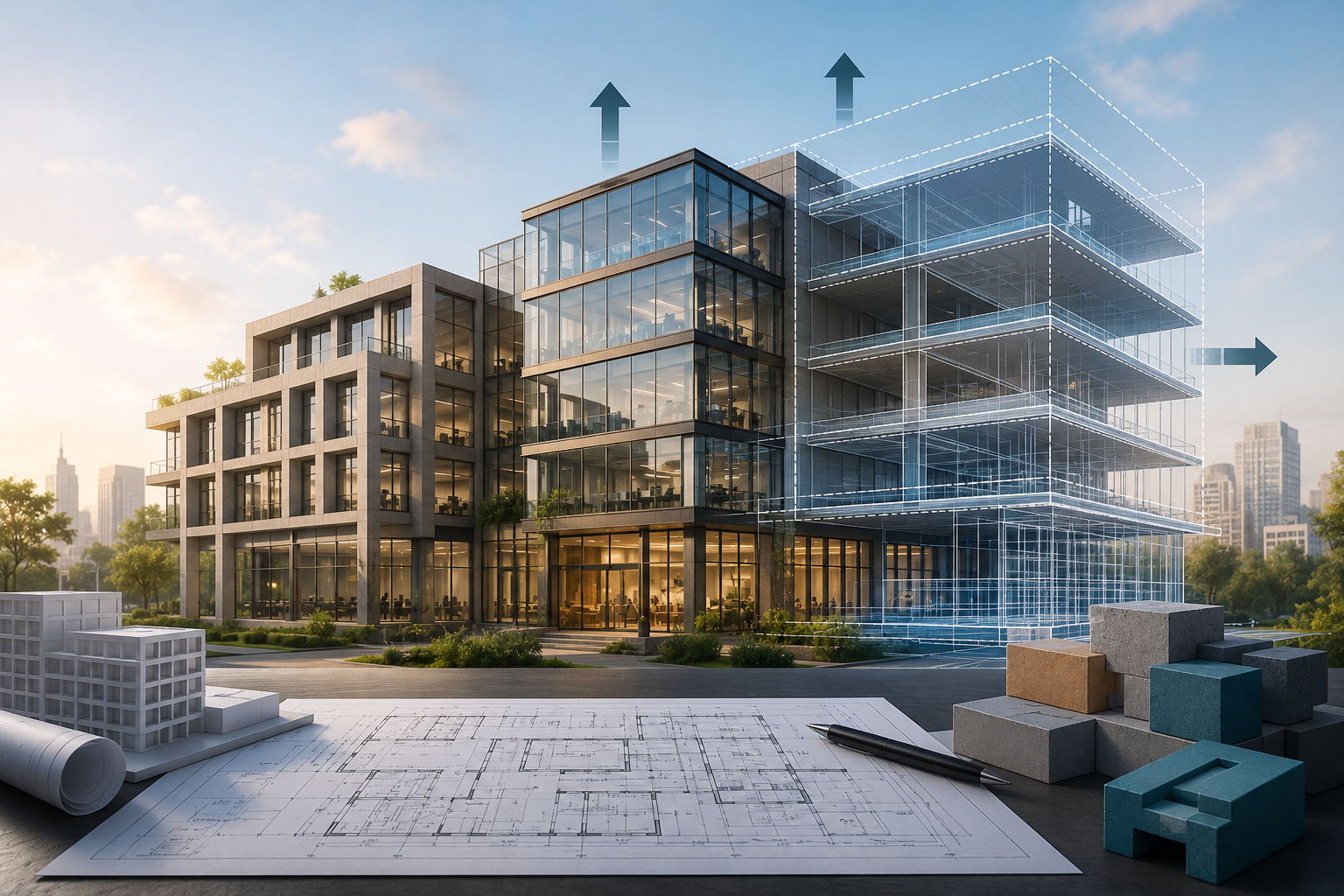
Why Future-Proofing Buildings Is Essential in Modern Construction
The way people use buildings is constantly evolving.
Businesses grow, technologies change, work environments shift, and operational requirements develop over time. A building designed solely for today’s needs may struggle to accommodate tomorrow’s demands, leading to costly renovations, operational disruptions, and reduced long-term value.
This is why future-proofing has become a key consideration in modern architecture and engineering.
Designing buildings for future expansion and adaptability allows owners and developers to maximize the lifespan of their investments while reducing the costs associated with major modifications in the future.
Rather than treating flexibility as an optional feature, successful projects incorporate adaptability into the design process from the very beginning.
What Is Building Adaptability?
Building adaptability refers to a structure’s ability to accommodate changes in use, occupancy, technology, and operational requirements throughout its lifecycle.
An adaptable building can evolve without requiring extensive demolition, structural alterations, or complete system replacements.
Examples of adaptability include:
- Expanding office spaces as businesses grow
- Converting commercial spaces into mixed-use developments
- Reconfiguring floor plans for changing tenant needs
- Integrating future technologies and smart building systems
- Increasing building capacity without major infrastructure upgrades
The more adaptable a building is, the easier and more cost-effective it becomes to respond to future challenges and opportunities.
The Cost of Designing Only for Present-Day Needs
Many buildings are designed based solely on current requirements and budget constraints.
While this approach may reduce initial construction costs, it often creates significant challenges later.
Common consequences include:
- Expensive renovations
- Limited expansion opportunities
- Increased operational disruptions
- Infrastructure limitations
- Reduced property value
- Difficulty attracting future tenants
In many cases, a modest investment during the design phase can prevent major expenditures years later.
Future-proofing is often one of the most cost-effective strategies available to building owners.
Why Adaptability Matters More Than Ever
Today’s construction environment is changing rapidly.
Several trends are driving the need for more flexible buildings:
Changing Workplace Requirements
Hybrid work models continue to reshape office space needs.
Organizations require spaces that can adapt to:
- Flexible seating arrangements
- Collaboration zones
- Private workspaces
- Technology upgrades
Buildings designed with adaptability in mind can accommodate these changes with minimal disruption.
Evolving Technology
Building technologies evolve much faster than building structures.
Modern facilities increasingly rely on:
- Smart building systems
- IoT devices
- Automated controls
- Advanced security systems
- Data-driven facility management
Future-ready infrastructure allows owners to integrate new technologies without major reconstruction.
Sustainability Goals
Environmental regulations and sustainability expectations continue to evolve.
Buildings that can accommodate future energy upgrades are better positioned to meet changing requirements and maintain long-term competitiveness.
Designing Flexible Building Infrastructure
One of the most important aspects of future-proofing involves designing infrastructure that supports future growth.
This includes:
- Mechanical systems
- Electrical systems
- Plumbing infrastructure
- Data networks
- Structural components
Planning for future capacity during the design phase often requires only a small increase in initial investment but can provide substantial long-term benefits.
The Role of MEP Engineering in Future-Proofing
Mechanical, Electrical, and Plumbing (MEP) systems are critical to building adaptability.
Because these systems are often the most expensive and disruptive components to modify after construction, thoughtful planning is essential.
Mechanical System Flexibility
HVAC systems should be designed to accommodate:
- Occupancy increases
- Future tenant modifications
- Building expansions
- Equipment upgrades
Strategies may include:
- Modular equipment selection
- Flexible ductwork layouts
- Expandable control systems
- Reserved mechanical space
These considerations allow future changes without requiring complete system replacement.
Electrical Infrastructure Planning
Electrical demands continue to increase due to advancing technologies and electrification initiatives.
Future-ready electrical design may include:
- Additional panel capacity
- Spare conduit pathways
- Flexible distribution systems
- Expansion-ready switchgear
- Electric vehicle charging provisions
This approach reduces future upgrade costs and minimizes operational disruptions.
Plumbing System Adaptability
Plumbing systems should also support future changes.
Planning considerations may include:
- Future fixture additions
- Water efficiency upgrades
- Tenant reconfigurations
- Potential building expansions
Early planning helps prevent costly modifications later.
Designing for Tenant Flexibility
Commercial buildings often experience changes in occupancy and tenant requirements throughout their lifespan.
Adaptable design helps owners accommodate these changes more efficiently.
Strategies include:
- Open floor plans
- Modular layouts
- Flexible service distribution
- Raised access flooring
- Demountable partitions
These features allow spaces to evolve without extensive renovations.
As a result, property owners can respond more quickly to market demands and reduce vacancy periods.
Structural Planning for Future Expansion
Future expansion opportunities should be evaluated during the initial design phase.
Structural engineers can incorporate features that support future growth, including:
- Expansion joints
- Foundation capacity allowances
- Roof load considerations
- Vertical expansion planning
- Structural grid flexibility
Without proper planning, future additions may require significant structural modifications that dramatically increase project costs.
Smart Buildings and Future Readiness
Smart building technologies continue to advance rapidly.
Buildings designed today should be capable of integrating future innovations such as:
- Building automation systems
- Occupancy analytics
- Predictive maintenance platforms
- Digital twin technology
- Advanced energy management systems
Creating adaptable digital infrastructure ensures buildings remain competitive as technologies evolve.
Supporting Sustainability Through Adaptability
Sustainability is not only about energy efficiency—it is also about longevity.
Buildings that can adapt to changing needs avoid premature obsolescence and reduce the environmental impact associated with demolition and reconstruction.
Adaptable buildings often support sustainability goals by:
- Extending building lifespan
- Reducing material waste
- Supporting energy upgrades
- Improving resource efficiency
- Minimizing future construction impacts
This makes adaptability a key component of sustainable design strategies.
The Financial Benefits of Future-Proofing
Although some future-proofing measures may increase upfront design or construction costs, they often generate significant long-term returns.
Potential financial benefits include:
- Lower renovation costs
- Reduced operational disruptions
- Higher property value
- Greater tenant retention
- Improved asset lifespan
- Increased market competitiveness
When viewed from a lifecycle perspective, adaptable buildings frequently provide a stronger return on investment than buildings designed only for immediate requirements.
How BIM Supports Building Adaptability
Building Information Modeling (BIM) plays an important role in designing flexible buildings.
BIM allows project teams to:
- Evaluate future expansion scenarios
- Coordinate building systems
- Identify infrastructure limitations
- Simulate building performance
- Improve long-term facility planning
Through better visualization and coordination, BIM helps ensure future-proofing strategies are integrated effectively during the design process.
How InnoDez Helps Clients Design for the Future
At InnoDez, we believe successful buildings should deliver value not only on the day they open but throughout their entire lifecycle.
Our expertise in:
- Architecture
- MEP Engineering
- BIM Modeling
- Construction Documentation
- Design Coordination
allows us to create solutions that balance current project requirements with future operational needs.
By incorporating flexibility, scalability, and long-term performance considerations into every project, we help clients protect their investments and prepare for future growth.
Conclusion
The most successful buildings are not simply designed for today’s needs—they are designed for tomorrow’s opportunities.
As technologies evolve, businesses expand, and operational requirements change, adaptable buildings provide owners with the flexibility needed to respond efficiently and cost-effectively.
Through strategic planning, coordinated engineering, and future-focused design, developers can create facilities that remain valuable, efficient, and competitive for decades to come.
In an increasingly dynamic built environment, future-proofing is no longer a luxury—it is a fundamental component of smart building design.