
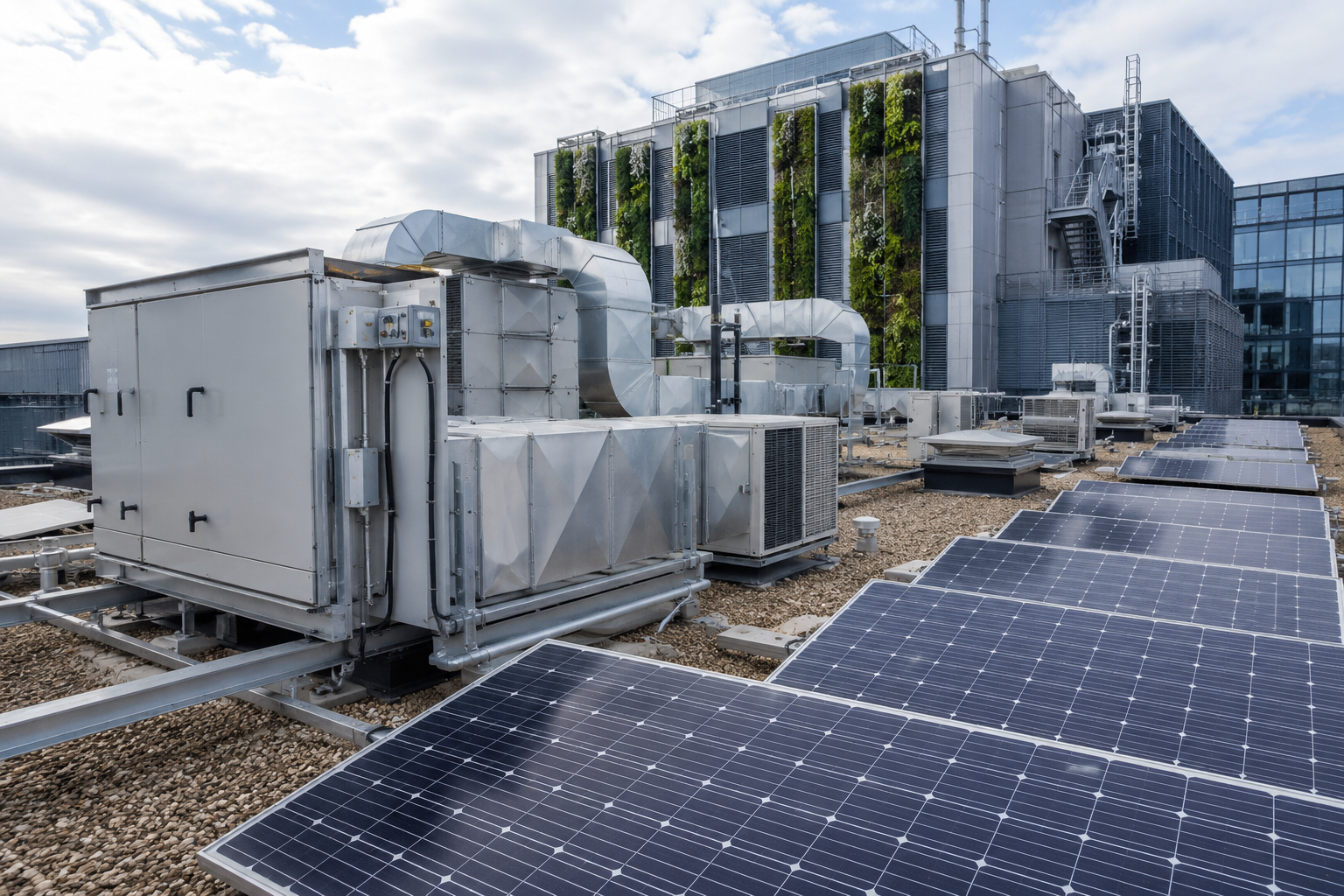
Why Retrofit Projects Are Becoming Essential Across the UK
The UK has committed to achieving net-zero carbon emissions by 2050, placing significant pressure on the built environment to reduce energy consumption and carbon output. While new sustainable developments continue to emerge, the majority of buildings that will exist in 2050 have already been constructed. This reality makes building retrofit and decarbonisation one of the most important challenges facing property owners, developers, and construction professionals today.
Retrofitting existing buildings offers a practical pathway toward improving energy performance, reducing operational costs, extending asset life, and meeting increasingly stringent environmental regulations. However, successful retrofit projects require far more than simply replacing outdated equipment. They demand careful planning, multidisciplinary engineering expertise, and a comprehensive understanding of how mechanical, electrical, and public health systems interact within existing structures.
At InnoDez, our engineering teams support retrofit and refurbishment projects through coordinated MEP design, BIM modelling, and technical consultancy that help clients modernise buildings while minimising disruption and controlling costs.
Understanding Building Decarbonisation
Building decarbonisation refers to the process of reducing or eliminating greenhouse gas emissions associated with a building’s operation. This typically involves improving energy efficiency, transitioning away from fossil fuel-based systems, and incorporating renewable energy technologies.
For many commercial and residential buildings across the UK, carbon emissions are primarily generated through:
- Heating systems powered by natural gas
- Inefficient HVAC equipment
- Outdated lighting systems
- Poor building controls
- High electrical consumption
- Inadequate insulation and thermal performance
Addressing these challenges requires a holistic engineering approach that considers both building services and overall building performance.
Why Existing Buildings Present Unique Engineering Challenges
Unlike new construction projects, retrofit projects involve working within the constraints of an existing structure.
Engineers often encounter challenges such as:
- Limited ceiling voids and service routes
- Aging infrastructure
- Incomplete documentation
- Occupied buildings that must remain operational
- Space restrictions for new equipment
- Structural limitations affecting system upgrades
These factors make detailed surveys, BIM coordination, and early-stage engineering assessments critical for project success.
Without proper planning, retrofit projects can experience significant cost overruns, programme delays, and installation conflicts during construction.
The Role of MEP Engineering in Retrofit Projects
MEP engineering plays a central role in building decarbonisation strategies.
Mechanical, electrical, and public health systems account for a substantial portion of a building’s energy usage. Upgrading these systems can generate significant performance improvements while supporting long-term sustainability objectives.
Mechanical System Upgrades
Mechanical systems often provide the largest opportunities for energy reduction.
Common retrofit measures include:
- Replacing aging boilers with heat pump systems
- Upgrading HVAC equipment
- Improving ventilation efficiency
- Installing variable speed drives
- Implementing heat recovery systems
- Optimising building controls
Modern mechanical solutions can significantly reduce energy demand while improving occupant comfort and indoor air quality.
Electrical System Improvements
Electrical infrastructure upgrades help improve operational efficiency and support future energy requirements.
Examples include:
- LED lighting retrofits
- Smart lighting controls
- Occupancy-based automation
- Electrical distribution upgrades
- EV charging infrastructure
- Renewable energy integration
Electrical engineers evaluate both current and future demand to ensure systems remain scalable and resilient.
Public Health Engineering Enhancements
Water systems also contribute to building performance and sustainability.
Retrofit opportunities may include:
- Water-efficient fixtures
- Rainwater harvesting systems
- Leak detection technology
- Hot water system optimisation
- Greywater recycling solutions
These improvements help reduce water consumption while supporting environmental targets.
BIM and Digital Engineering in Retrofit Projects
Building Information Modelling (BIM) has become increasingly valuable in retrofit and refurbishment projects.
Unlike traditional 2D drawings, BIM allows project teams to create detailed digital representations of existing buildings and proposed upgrades.
Benefits include:
- Accurate existing condition modelling
- Improved multidisciplinary coordination
- Clash detection before construction
- Better cost forecasting
- Enhanced stakeholder collaboration
- Reduced site risks
By identifying potential issues early, BIM helps reduce rework and improve project certainty.
Heat Pumps and Electrification Strategies
One of the most significant trends in building decarbonisation is the transition from gas-fired heating systems to electric alternatives.
Heat pumps have emerged as a key technology due to their ability to deliver heating efficiently while reducing carbon emissions.
However, successful heat pump implementation requires careful engineering assessment, including:
- Building heat loss analysis
- Electrical capacity evaluation
- Distribution system suitability
- Plant space requirements
- Operational performance modelling
Not every building can simply replace a boiler with a heat pump without additional modifications.
A thorough engineering study helps identify the most effective pathway toward electrification.
Improving Building Performance Through Smart Controls
Many buildings consume excessive energy due to poor control strategies rather than inefficient equipment alone.
Smart building technologies can optimise performance by continuously monitoring and adjusting system operation.
Examples include:
- Building Management Systems (BMS)
- Smart thermostats
- Occupancy sensors
- Energy monitoring platforms
- Predictive maintenance systems
- Automated fault detection
These technologies provide building operators with valuable insights that support ongoing energy reduction efforts.
Financial Benefits of Building Retrofits
While sustainability is often the primary driver behind retrofit projects, financial benefits can be equally compelling.
Well-planned retrofit programmes can deliver:
- Lower utility costs
- Reduced maintenance expenses
- Increased asset value
- Improved tenant satisfaction
- Enhanced building marketability
- Greater regulatory compliance
As energy costs continue to rise, building owners increasingly view retrofit projects as long-term investments rather than operational expenses.
Preparing Buildings for Future Regulations
The regulatory landscape surrounding building performance continues to evolve.
Property owners are facing increasing pressure from:
- Energy performance requirements
- Carbon reporting obligations
- Sustainability certifications
- Tenant expectations
- ESG commitments
Buildings that fail to adapt may become less competitive in the market and face higher operating costs in the future.
Proactive retrofit strategies help organisations remain ahead of regulatory changes while improving long-term asset performance.
How InnoDez Supports Building Retrofit Projects
Successful retrofit and decarbonisation projects require more than equipment replacement. They require coordinated engineering expertise that balances sustainability objectives, operational requirements, budget constraints, and construction feasibility.
At InnoDez, we provide integrated MEP engineering, BIM coordination, and technical consultancy services that help clients transform existing buildings into high-performing, energy-efficient assets. Our multidisciplinary approach enables project teams to identify opportunities, reduce risks, and deliver retrofit solutions that support long-term sustainability goals.
Conclusion
Building retrofit and decarbonisation will play a critical role in achieving the UK’s net-zero ambitions. As existing buildings face increasing pressure to improve energy performance and reduce carbon emissions, engineering-led retrofit strategies are becoming essential.
Through careful planning, modern MEP design, BIM coordination, and smart technology integration, building owners can significantly improve efficiency, reduce operational costs, and future-proof their assets for years to come.
Investing in retrofit projects today not only supports environmental goals but also creates more resilient, valuable, and sustainable buildings for the future.