
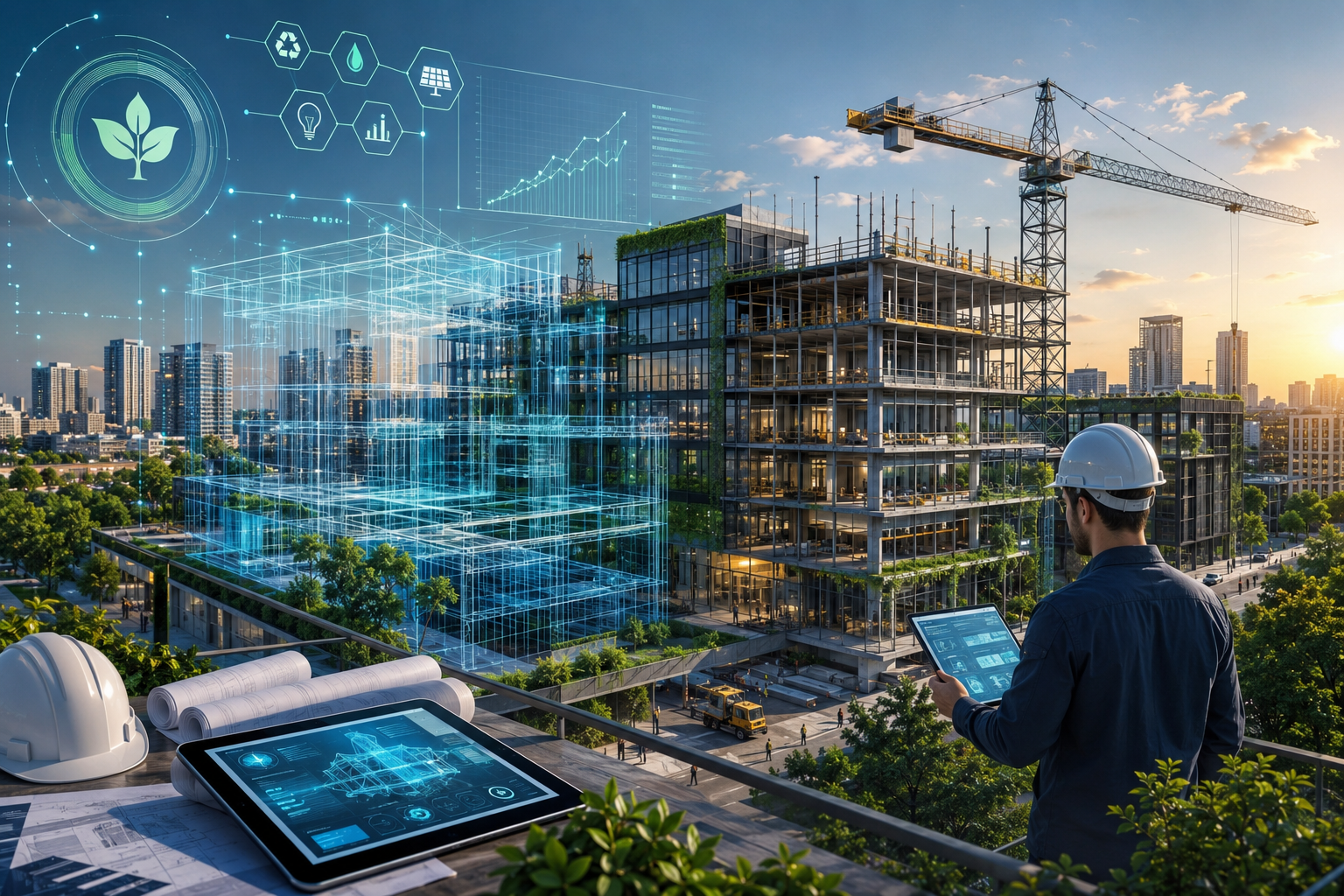
The Future of Construction Is Digital and Sustainable
The construction industry is undergoing a significant transformation. Increasing environmental regulations, rising energy costs, evolving occupant expectations, and the UK’s commitment to achieving net-zero carbon emissions by 2050 are driving demand for smarter, more sustainable buildings.
Traditional design and construction methods are no longer sufficient to meet these challenges. Today, developers, architects, engineers, and contractors are turning to advanced digital technologies to improve building performance, increase efficiency, reduce waste, and create more sustainable built environments.
From Building Information Modelling (BIM) and digital twins to smart building systems and artificial intelligence (AI), sustainable construction technology is reshaping how buildings are designed, constructed, operated, and maintained.
At InnoDez, we leverage advanced engineering technologies and BIM workflows to help project teams deliver high-performing, future-ready buildings that support long-term sustainability goals.
What Is Sustainable Construction Technology?
Sustainable construction technology refers to the use of digital tools, innovative systems, and advanced engineering solutions that minimise environmental impact while improving building performance throughout the entire asset lifecycle.
These technologies aim to:
- Reduce energy consumption
- Lower carbon emissions
- Minimise construction waste
- Improve operational efficiency
- Enhance occupant comfort
- Extend building lifespan
- Support data-driven decision-making
Rather than focusing solely on the construction phase, sustainable technologies consider the complete lifecycle of a building, from concept and design through operation, maintenance, refurbishment, and eventual decommissioning.
Building Information Modelling (BIM): The Foundation of Digital Construction
Building Information Modelling (BIM) has become one of the most important technologies in modern construction.
BIM creates intelligent digital representations of buildings that integrate architectural, structural, and MEP information within a single collaborative environment.
Unlike traditional 2D drawings, BIM allows project teams to visualise, analyse, coordinate, and optimise building systems before construction begins.
Benefits of BIM in Sustainable Construction
BIM supports sustainability objectives by enabling:
- Improved multidisciplinary coordination
- Early clash detection
- Reduced material waste
- More accurate quantity take-offs
- Enhanced design optimisation
- Better construction planning
- Improved facility management
By identifying conflicts and inefficiencies during design, BIM reduces costly rework, shortens construction schedules, and improves overall project outcomes.
Digital Twins: Creating Intelligent Building Assets
Digital twin technology is rapidly gaining adoption across the built environment sector.
A digital twin is a dynamic virtual representation of a physical building that continuously receives and analyses real-time operational data.
Unlike static BIM models, digital twins evolve throughout the building’s lifecycle.
Using sensors, IoT devices, and building management systems, digital twins allow building operators to monitor performance continuously.
Applications of Digital Twins
Digital twins can support:
- Energy performance optimisation
- Predictive maintenance
- Space utilisation analysis
- Equipment performance monitoring
- Fault detection and diagnostics
- Lifecycle asset management
By providing actionable insights, digital twins help building owners make informed decisions that improve efficiency and reduce operating costs.
Smart Buildings and Building Automation Systems
Smart buildings use interconnected technologies to automatically monitor and control building operations.
Modern Building Management Systems (BMS) integrate various building services, including:
- HVAC systems
- Lighting systems
- Security systems
- Fire protection systems
- Energy monitoring systems
- Occupancy sensors
Automation allows these systems to respond dynamically to changing occupancy patterns and environmental conditions.
For example, HVAC and lighting systems can automatically adjust output based on room occupancy, reducing unnecessary energy consumption.
Benefits of Smart Building Technologies
Smart buildings offer numerous advantages, including:
- Lower energy costs
- Improved occupant comfort
- Enhanced indoor environmental quality
- Reduced maintenance requirements
- Greater operational visibility
- Improved sustainability performance
As smart technologies continue to evolve, they are becoming an essential component of modern sustainable developments.
Artificial Intelligence in Building Engineering
Artificial intelligence is beginning to transform building design, construction, and operations.
AI-driven systems can analyse large volumes of data to identify patterns, predict failures, and optimise building performance.
In the construction sector, AI applications include:
- Generative design optimisation
- Energy modelling
- Predictive maintenance
- Construction scheduling
- Automated quality control
- Risk analysis
For building operators, AI can continuously analyse performance data and recommend operational adjustments that reduce energy use while maintaining occupant comfort.
Internet of Things (IoT) and Connected Buildings
The Internet of Things (IoT) refers to networks of connected sensors and devices that collect and exchange information.
In buildings, IoT technologies provide valuable real-time data regarding:
- Temperature
- Humidity
- Occupancy
- Indoor air quality
- Energy usage
- Equipment status
This information enables building operators to make data-driven decisions and identify opportunities for continuous improvement.
IoT integration also supports predictive maintenance strategies by detecting potential equipment failures before they result in costly downtime.
Sustainable Construction Through Prefabrication and Modular Methods
Off-site manufacturing and modular construction techniques are increasingly being adopted to improve sustainability outcomes.
Prefabricated building components can reduce:
- Material waste
- Construction timelines
- Site disruption
- Carbon emissions associated with on-site activities
Modular MEP systems, in particular, offer significant benefits through improved quality control and reduced installation risks.
Digital technologies such as BIM play an important role in coordinating prefabricated components and ensuring accurate installation.
Data-Driven Energy Management
Energy performance remains a primary focus for sustainable construction.
Advanced analytics platforms now allow building owners to continuously monitor and optimise energy consumption.
Data-driven energy management systems can:
- Identify inefficiencies
- Detect abnormal energy usage
- Benchmark building performance
- Support carbon reporting
- Optimise operational strategies
Continuous monitoring enables organisations to achieve long-term energy savings while supporting environmental objectives.
Challenges to Technology Adoption in Construction
Although digital technologies provide substantial benefits, implementation challenges still exist.
Common barriers include:
- Initial investment costs
- Integration complexity
- Skills shortages
- Resistance to organisational change
- Data security concerns
- Legacy building infrastructure limitations
Successful technology adoption requires strategic planning, stakeholder engagement, and ongoing training.
As digital maturity increases across the industry, these barriers are gradually diminishing.
The Role of Engineering Consultants in Digital Transformation
Engineering consultants play a vital role in helping project teams navigate emerging technologies.
Specialist consultants assist clients by:
- Evaluating technology suitability
- Developing digital strategies
- Coordinating multidisciplinary models
- Conducting performance analysis
- Supporting implementation and commissioning
- Optimising building operations
A well-planned digital strategy ensures technologies deliver measurable value throughout the building lifecycle.
How InnoDez Supports Sustainable Construction Projects
At InnoDez, we integrate advanced BIM workflows, digital engineering tools, and sustainable design principles to help clients create efficient, resilient, and future-ready buildings.
Our multidisciplinary teams collaborate closely with project stakeholders to deliver coordinated engineering solutions that improve project certainty, optimise building performance, and support long-term sustainability objectives.
From BIM coordination and MEP design to digital modelling and technical consultancy, we help transform innovative concepts into successful built environments.
Conclusion
Sustainable construction technology is redefining how buildings are designed, delivered, and operated.
Digital tools such as BIM, digital twins, AI, smart building systems, and IoT are enabling project teams to improve efficiency, reduce carbon emissions, and create healthier, more resilient buildings.
As the UK construction industry continues its transition toward a low-carbon future, organisations that embrace digital innovation will be better positioned to deliver sustainable, high-performing assets that meet the demands of tomorrow.