
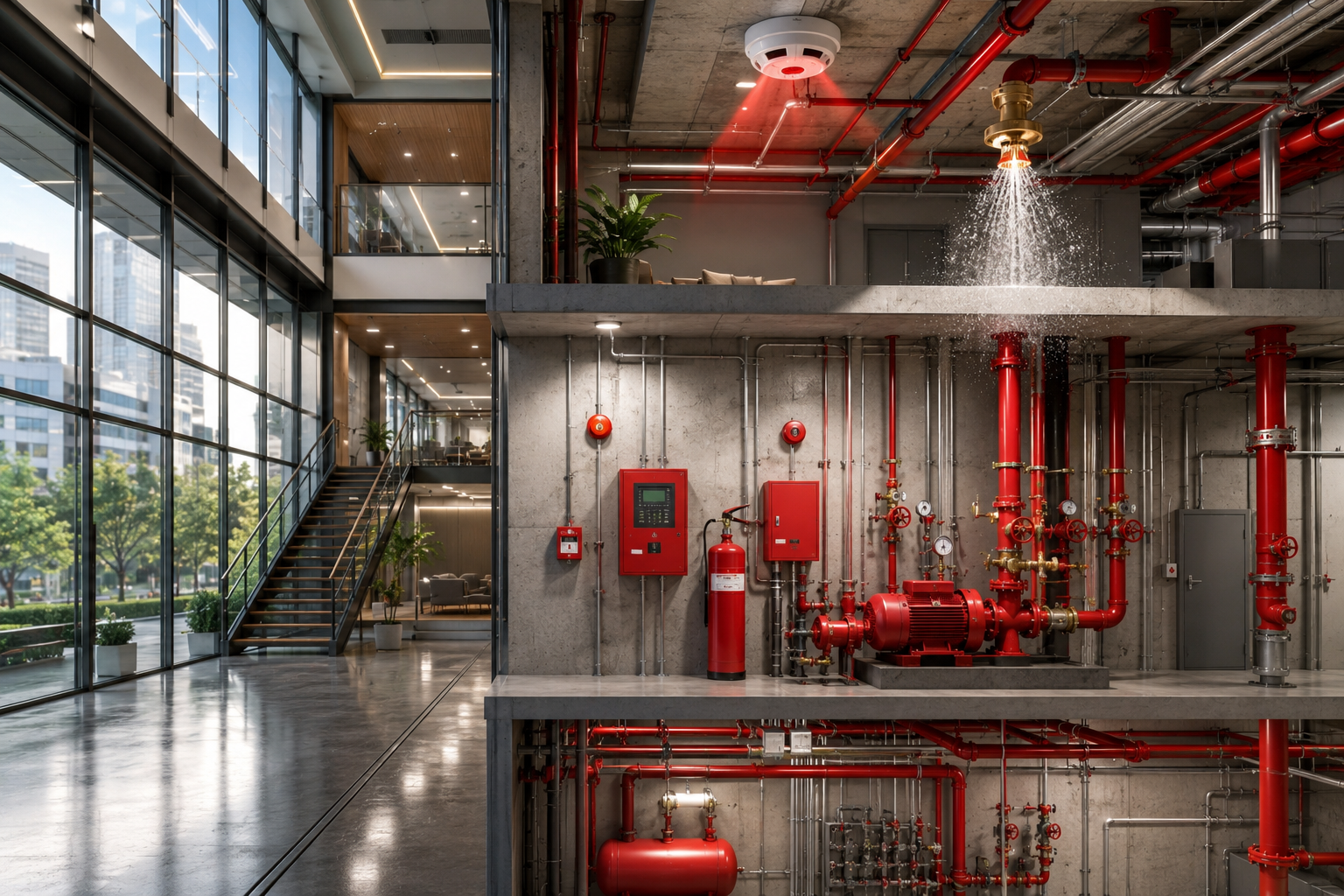
Why Fire Protection Engineering Is Essential in Modern Construction
Fire safety is one of the most critical considerations in building design and construction. Every year, fires in residential, commercial, industrial, and healthcare facilities cause significant financial losses, operational disruptions, and, most importantly, threaten human life.
Modern buildings have become increasingly complex, incorporating sophisticated mechanical, electrical, and public health systems alongside advanced architectural designs. While these innovations improve building performance and occupant comfort, they also create new challenges for fire safety.
As a result, fire protection engineering has become an integral part of the building design process. Through careful planning, system integration, and regulatory compliance, fire protection engineers help ensure that buildings can prevent, detect, contain, and respond effectively to fire incidents.
At InnoDez, we support project teams through coordinated MEP engineering and BIM services that help integrate fire protection systems efficiently throughout the building lifecycle.
What Is Fire Protection Engineering?
Fire protection engineering is the discipline focused on safeguarding people, property, and assets from the effects of fire.
The primary objectives of fire protection engineering include:
- Preventing fire ignition
- Limiting fire spread
- Protecting building occupants
- Facilitating safe evacuation
- Supporting emergency response operations
- Minimising property damage
- Maintaining business continuity
Achieving these objectives requires a combination of passive and active fire protection strategies, supported by detailed engineering analysis and multidisciplinary coordination.
Understanding Fire Risks in Buildings
Every building presents unique fire risks depending on its use, occupancy, construction materials, and operational activities.
Factors influencing fire risk include:
- Building occupancy type
- Occupant density
- Building height and size
- Combustible materials
- Electrical installations
- Mechanical equipment
- Storage arrangements
- Internal layouts
A comprehensive fire risk assessment helps identify potential hazards and informs the design of appropriate fire protection measures.
Early identification of fire risks allows project teams to develop safer, more resilient buildings.
Passive Fire Protection Systems
Passive fire protection consists of built-in building features designed to contain fire and prevent its spread without requiring activation.
These measures are permanently integrated into the building structure.
Examples include:
- Fire-rated walls and floors
- Fire-resistant doors
- Fire stopping systems
- Compartmentation
- Fire dampers
- Structural fire protection
- Smoke barriers
The Importance of Fire Compartmentation
Compartmentation divides buildings into separate fire-resistant zones.
The objective is to contain fire and smoke within a defined area for a specified period, allowing occupants to evacuate safely while limiting damage.
However, poorly coordinated building services can compromise compartmentation.
Mechanical, electrical, and plumbing systems frequently penetrate fire-rated assemblies. Without proper sealing and coordination, these penetrations can create pathways for fire and smoke spread.
Close collaboration between MEP engineers and fire protection specialists is essential to preserve fire integrity throughout the building.
Active Fire Protection Systems
Active fire protection systems require activation, either automatically or manually, to detect, control, or suppress fire events.
Common active systems include:
- Automatic sprinkler systems
- Fire alarm systems
- Smoke detection systems
- Fire suppression systems
- Smoke control systems
- Emergency lighting systems
- Voice evacuation systems
These systems work together to protect occupants and minimise property damage during emergencies.
Fire Detection and Alarm Systems
Early fire detection is essential for protecting life and property.
Modern fire alarm systems continuously monitor buildings for signs of fire and provide immediate notification when hazards are detected.
Components typically include:
- Smoke detectors
- Heat detectors
- Manual call points
- Control panels
- Audible alarms
- Visual warning devices
Advanced systems may also integrate with building management systems, access control systems, and emergency communication networks.
Timely detection and notification significantly improve evacuation effectiveness and emergency response.
Automatic Sprinkler Systems
Automatic sprinkler systems remain one of the most effective methods for controlling fires.
Contrary to common misconceptions, sprinklers activate individually in response to heat rather than simultaneously throughout the entire building.
Benefits of sprinkler systems include:
- Early fire suppression
- Reduced fire spread
- Lower property damage
- Increased occupant safety
- Reduced business interruption
Sprinkler system design depends on various factors, including occupancy classification, hazard levels, water supply availability, and building geometry.
Careful hydraulic analysis and system coordination are essential to ensure reliable performance.
Smoke Control and Management Systems
Smoke often poses a greater risk to occupants than flames themselves.
Smoke inhalation can severely impair visibility, hinder evacuation, and create life-threatening conditions.
Smoke control systems are designed to:
- Remove smoke from occupied spaces
- Maintain tenable escape routes
- Protect firefighting operations
- Reduce smoke migration between compartments
Examples include:
- Smoke extract systems
- Pressurisation systems
- Mechanical smoke ventilation
- Natural smoke ventilation systems
These systems are particularly important in high-rise buildings, atria, underground facilities, and complex commercial developments.
The Role of MEP Coordination in Fire Protection
Fire protection systems rarely operate independently.
Successful fire safety strategies require close coordination between architectural, structural, mechanical, electrical, and public health disciplines.
Examples of critical coordination activities include:
- Integrating sprinkler pipework with HVAC systems
- Coordinating fire dampers within ductwork
- Routing emergency power systems
- Maintaining fire compartment integrity
- Providing access for maintenance and inspection
- Coordinating evacuation systems
Poor coordination can lead to installation conflicts, costly redesigns, construction delays, and compromised fire safety performance.
BIM and Digital Coordination for Fire Safety
Building Information Modelling (BIM) has transformed the coordination of fire protection systems.
Using BIM, project teams can:
- Identify clashes before construction
- Coordinate fire-rated penetrations
- Improve multidisciplinary collaboration
- Visualise fire protection layouts
- Reduce installation conflicts
- Enhance construction quality
BIM enables engineers and contractors to identify potential issues early, reducing risks and improving overall project outcomes.
For complex developments, digital coordination has become an essential component of effective fire protection design.
Fire Protection in Sustainable Buildings
As sustainable building design becomes increasingly prevalent, fire safety considerations must evolve alongside new technologies.
Examples include:
- Lithium-ion battery storage systems
- Solar photovoltaic installations
- Electric vehicle charging infrastructure
- Timber construction systems
- Renewable energy technologies
While these technologies support environmental goals, they may introduce additional fire risks that require specialist engineering evaluation.
Balancing sustainability objectives with robust fire protection strategies is essential for future-ready buildings.
Regulatory Compliance and Fire Safety Standards
Building fire safety is governed by strict regulations and standards.
Compliance requirements vary depending on building type, occupancy, and project scope.
Key considerations may include:
- Building Regulations
- Approved Document B requirements
- Fire risk assessments
- British Standards
- Occupancy classifications
- Insurance requirements
Early engagement with fire protection specialists helps ensure compliance while avoiding costly changes later in the project.
How InnoDez Supports Fire Protection Coordination
At InnoDez, we provide integrated MEP engineering and BIM coordination services that support the successful integration of fire protection systems across a wide range of building projects.
Through multidisciplinary collaboration, digital modelling, and coordinated engineering workflows, we help project teams minimise conflicts, improve constructability, and support safer building environments.
Our approach ensures that fire protection systems are effectively integrated with other building services while maintaining compliance, performance, and operational efficiency.
Conclusion
Fire protection engineering plays a vital role in safeguarding people, property, and business operations.
Through the integration of passive and active fire protection measures, coordinated MEP design, BIM collaboration, and rigorous compliance processes, project teams can create safer and more resilient buildings.
As building complexity continues to increase, early fire protection planning and multidisciplinary coordination will remain essential to delivering successful, future-ready developments.