

Table of Contents
- Introduction
- Set Clear Goals And Constraints
- Budget, Programme, And Value
- Permissions, Boundaries, And Utilities
- Site Layout: Zones That Work All Year
- Structure, Levels, And Groundworks
- Drainage, SuDS, And Water Management
- Lighting, Power, And Data Outdoors
- Materials, Detailing, And Durability
- Access, Safety, And Inclusivity
- Procurement, Trades, And Quality Control
- Typical Timeline: From Sketch To Sundowners
- Maintenance, Biodiversity, And Long-Term Care
- Conclusion
Introduction
Planning a Backyard Remodel in the UK is exciting, but the strongest results come from a plan that blends lifestyle, permissions, robust detailing, and smart services. Whether you want a covered terrace, outdoor kitchen, garden office, or family play space, this guide explains the decisions that shape comfort, cost, and durability so your back garden works on day one and year five.
Set Clear Goals And Constraints
Start with an honest brief. Who will use the space, and when. Are you hosting friends, working from a studio, growing veg, or aiming for a low-maintenance retreat. Note non-negotiables such as level access at the kitchen doors, a shaded reading corner, secure bike storage, or a play lawn. Record what can flex if the budget tightens, for example postponing a pergola or phasing planting.
Measure the plot carefully and sketch all fixed features: house openings, boiler flues, drains, manholes, trees, sheds, lighting points, and boundaries. Sun path checks will show where to place breakfast seating in spring and a warm evening spot in late summer without glare to indoor rooms. Think about neighbours, overlooking, and views you want to keep or screen.
Budget, Programme, And Value
Create a cost plan that covers design, permissions, surveys, groundworks, hard landscaping, planting, lighting, power, and contingency. A staged programme spreads spend and reduces disruption. For best value, prioritise elements that you touch every day: level thresholds, sheltered seating, a weather-ready surface, and efficient lighting.
- Design once, build many. Repeat paving modules and standard fence panels to reduce wastage and labour.
- Spend where it lasts. Choose durable sub-bases, real drainage, and quality fixings to avoid remedial work later.
Permissions, Boundaries, And Utilities
Many elements of a Backyard Remodel fall under permitted development, but checks matter. In conservation areas, national parks, or flats, stricter controls apply. Outbuildings and garden offices must respect height, position, and use rules, and cannot consume too much of the curtilage. Fences and walls near highways may have height limits. The UK Planning Portal provides clear guidance on what needs consent and what does not.
Before you break ground, map buried services. Confirm routes for gas, water, sewer, electric, and telecoms, and agree with neighbours if you intend to replace a shared fence or party wall. If you plan an outdoor kitchen, hot tub, EV charging point, or a dedicated supply to a garden room, a coordinated electrical design is safer than incremental extensions. A short conversation with our team can prevent rework and delays. See our UK services for InnoDez UK MEP Design and InnoDez UK Structural Engineering.
Site Layout: Zones That Work All Year
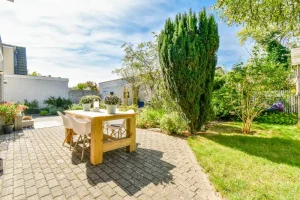
Split the garden into clear zones connected by safe routes. A covered terrace by the kitchen door supports daily use in all weather. A secondary deck or gravel pad in a sunny corner works for relaxed afternoons. Keep play zones visible from the house. If you need storage, hide sheds behind planting and line up doors to short paths to avoid mud trails. A small plot benefits from diagonals and layered planting to stretch perspective, while larger gardens suit a central lawn with routes around the edge so people circulate without cutting across grass.
Structure, Levels, And Groundworks
Levels drive comfort and accessibility. Aim for near-flush thresholds with correct falls away from the house. Where you step down, keep risers even and treads generous. If the site needs retaining, design safe heights with handrails and child-friendly barriers. For decks, specify load-tested foundations and moisture-resistant framing. Concrete pads or screw piles both work if the soil investigation supports them. Heavy features such as pizza ovens, built-in seating, or garden rooms may require local pad foundations sized by a structural engineer.
Drainage, SuDS, And Water Management
UK rainfall is becoming heavier, so manage runoff properly. Permeable paving, slot drains to soakaways, and planted rain gardens reduce standing water and protect the house. Check where existing gullies discharge and do not cover manholes. A water butt fed from a shed roof saves mains water for planting, and a simple drip line helps new beds establish with low waste. If your soil is clay, increase capacity and slow the flow rather than forcing it to hard drains.
Lighting, Power, And Data Outdoors
Outdoor lighting should be practical and low glare. Light routes and steps for safety, then add warm accents to seating, trees, or a water feature. Prefer low-level bollards and wall lights over bright floods. Choose 3000 K warm white for evening comfort. Provide weatherproof sockets in sensible locations and a spare conduit from house to future features so you can add a heat lamp, projector, or EV point later. All new circuits must comply with BS 7671 and be installed by a competent electrician with the correct certification.
If you are planning a garden office, include a data cable as well as power to keep video calls stable. Our MEP team can assemble a neat outdoor schedule that avoids site improvisation and messy surface conduits.
Materials, Detailing, And Durability
Choose finishes for UK weather and maintenance. Porcelain slabs provide frost resistance and crisp edges. Clay pavers bring character and grip. Composites can work if the sub-structure is ventilated and fixings suit the manufacturer specification. Detail drainage gaps at walls, seal end-grains on timber, and use stainless fixings near planters and water. Avoid trip lips by setting adjacent surfaces within a few millimetres. Planting ties the composition together, with evergreen structure for winter and perennials for movement and seasonal colour.
Access, Safety, And Inclusivity
Design for all ages. Provide at least one step-free route from kitchen to main seating. Keep steps consistent, add handrails where needed, and ensure paving has slip resistance in the wet. Place lighting controls where you can reach them from the house and consider PIR sensors for paths. If you have young children, plan locked storage for tools and chemicals, fit guards to water features, and choose balustrades that cannot be climbed.
Procurement, Trades, And Quality Control
Gather at least three comparable quotes with drawings and a schedule that lists surfaces, edges, drainage, planting, lighting, and waste removal. Agree who orders what, who sets levels, who checks underground services, and who handles Building Control if needed. Ask for product datasheets and samples so expectations match reality. Record the build with photos before everything is buried, especially drains, ducts, and foundations.
Typical Timeline: From Sketch To Sundowners
- Feasibility and budget check with a simple plan and site photos.
- Measured survey and outline design with materials palette.
- Technical drawings for levels, drainage, power, and structure where required.
- Quotes and programme aligned to seasons and lead times.
- Groundworks including drainage, edges, and sub-bases.
- Surfaces, planting, lighting followed by commissioning and handover.
Maintenance, Biodiversity, And Long-Term Care
Good gardens improve with light maintenance. Agree a seasonal plan for pruning, feed, mulch, and jet-wash limits, and keep a small budget for replacements after the first year. Choose pollinator-friendly species, add a bird water source, and let parts of the lawn grow longer in summer to support biodiversity. Where noise is an issue, shape planting for screening and use acoustic fences near busy roads. Capture a simple manual at completion that lists product names, sealers, paint codes, transformer locations, and the electrician contact. This saves time when you need spares or additions.
Conclusion
A successful Backyard Remodel brings planning rules, drainage, and services together with a simple, durable layout. If you want help coordinating structure, power, lighting, and water so installers can work quickly and cleanly, our team can deliver a clear package that keeps costs predictable and quality high. Explore recent work here: InnoDez UK Projects and start a brief here: InnoDez UK Contact. For planning guidance, the UK Planning Portal is a strong first stop, and for best practice on sustainable drainage the CIRIA SuDS Manual is widely used.