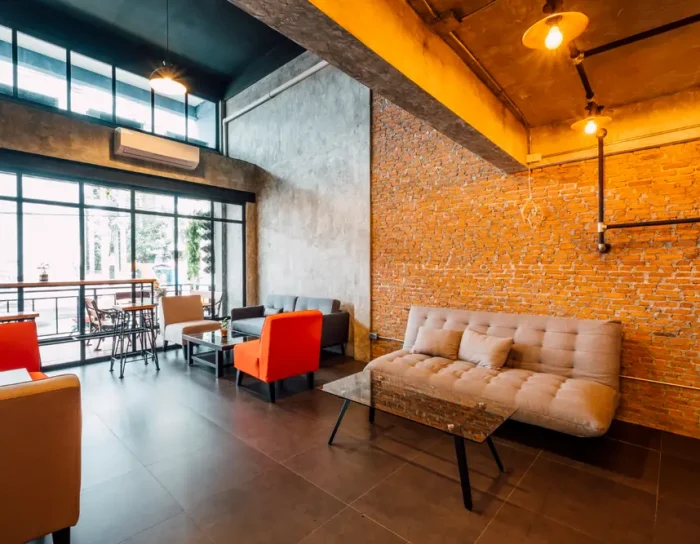
Atrium Café Fit-Out, Bullring & Grand Central, Birmingham
Case Study 7:
Atrium Café Fit-Out
Sector: Food & beverage
Location: Bullring, Birmingham, England
Size: 95 m²
Status: Completed Q2 2024
Project overview
InnoDez UK delivered a fast-track MEP engineering and energy upgrade for a 95 m² café unit on the lower mall concourse at Bullring & Grand Central. Working within landlord constraints (no visible façade grilles, designated risers only, night-shift access), the team produced coordinated Mechanical, Electrical and Plumbing design and engineering that keeps the space comfortable through peak footfall while cutting operational energy.
Brief
Provide stable temperatures without draughts at the shopfront, robust kitchen extract with odour abatement, quiet operation next to fashion tenants, and simple controls staff can actually use. Improve energy performance vs. the legacy fit-out and hand over with clear metering so the operator can track baseload and schedule drift.
Our scope
Mechanical: High-efficiency heat-pump VRF with heat-recovery; low-velocity linear slot supply at the front zone; DOAS outdoor air with energy-recovery and CO₂-based demand control; tempered make-up air to the cookline.
Plumbing: New hot- and cold-water services, point-of-use heater for hand-wash stations, backflow protection to risk category, floor gully and condensate routing; underslung grease interceptor sized to British guidance with accessible maintenance path.
Electrical: New distribution board with spare capacity and sub-metering for HVAC, lighting and small power; dedicated clean circuits for espresso equipment and refrigeration; surge protection and RCDs to BS 7671.
Kitchen extract & odour control: Canopy extract with acoustic liner, ESP + UV + carbon polishing in a lined riser; discharge via landlord riser to roof.
Controls & energy: Simple scene-based control (trading / clean-down / closed); night-setback; occupancy-linked ventilation to trim fan energy.
Key challenges
Routes were agreed early with the landlord to protect smoke zones and signage lines. Sprinkler head moves were coordinated to the new ceiling layout; emergency lighting and fire alarm interfaces were set out on an interface schedule for Building Control. Ceiling depths are maintained by keeping the main ducted DOAS run at the back-of-house and using concealed linear slots at the customer edge.
Our approach
Designed and documented to UK regs and typical landlord standards, including Part L (energy), Part F (ventilation), Part B (fire), Part M (access), BS 7671 (electrical), BS 5839 (fire detection), and BS 5266 (emergency lighting). Odour and noise targets at the lease line were evidenced with supplier data and third-octave attenuation calcs.
Compliance and approvals
We worked with local authorities to ensure compliance with Birmingham’s city guidelines for residential density and mixed-use developments. All MEP systems were designed in line with UK regulations, including Part L for energy efficiency, Part B for fire safety, and Part M for accessibility. The building also meets the necessary regulations for air quality and soundproofing, making it a sustainable and livable development.
Outcome
Calm front-of-house with even temperatures and low background noise next to the mall.
Verified odour control at lease line during a live service.
Energy use reduced vs. the outgoing fit-out through heat-recovery, demand-controlled ventilation and metering-led tuning.
Clear O&M and a one-page landlord guide for isolators, filters and cleaning intervals.