
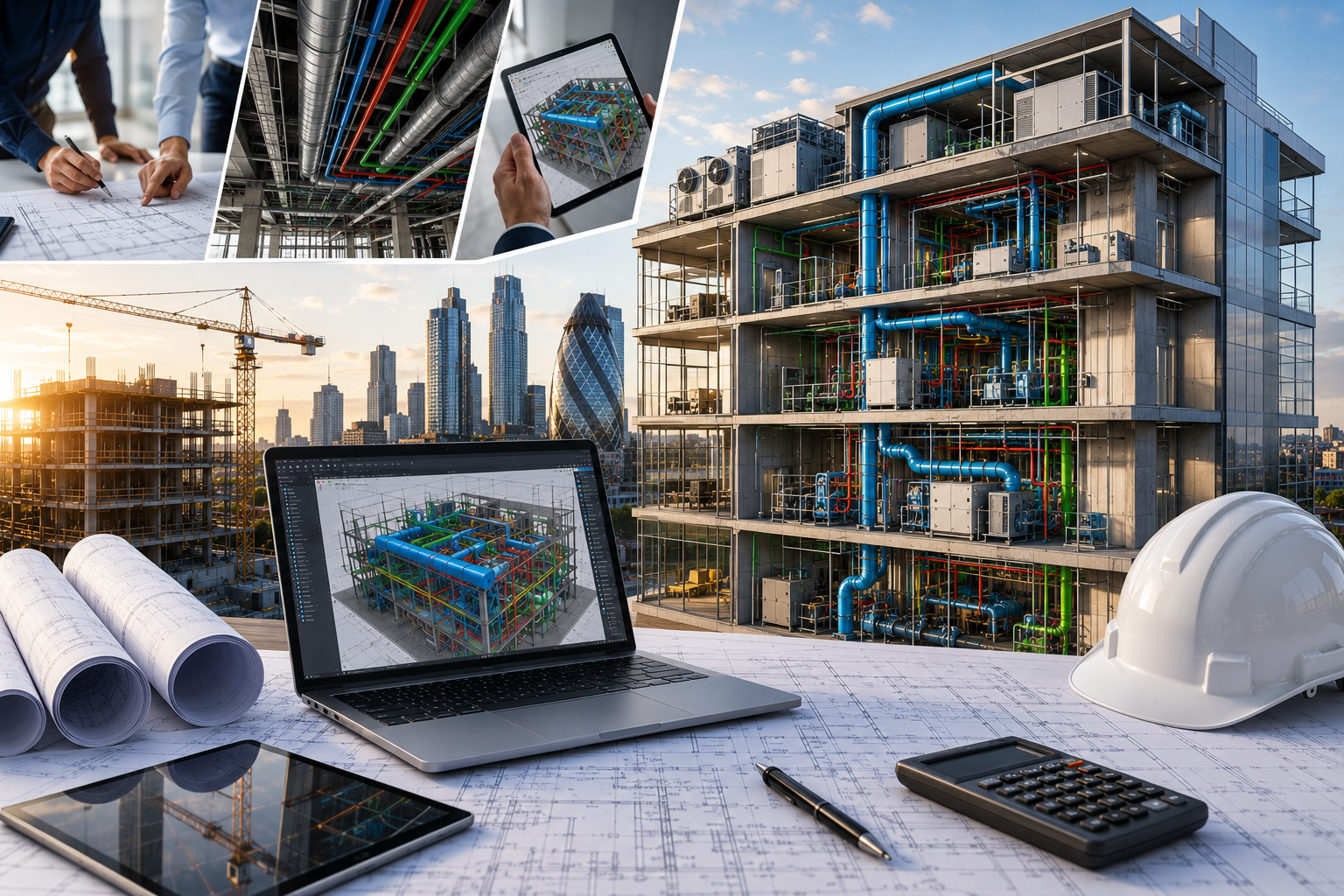
Why MEP Engineering Has Become a Critical Part of Modern Construction
Successful construction projects depend on more than architectural vision and structural design. Behind every efficient, comfortable, and high-performing building are carefully planned mechanical, electrical, and public health systems that support daily operations and long-term performance.
Yet MEP engineering is often overlooked during the early stages of project planning.
When building services are treated as an afterthought, projects can face design conflicts, budget overruns, construction delays, and operational inefficiencies. Conversely, when MEP engineering is integrated from the beginning, project teams gain greater control over costs, timelines, energy performance, and long-term building value.
For developers, architects, contractors, and property owners, MEP engineering is one of the most effective tools for reducing project risk and delivering better-performing buildings.
Understanding Project Risk in Construction
Every construction project involves risk.
Some risks are financial, while others affect schedules, compliance, construction quality, and operational performance.
Common project risks include:
- Construction delays
- Cost overruns
- Design conflicts
- Regulatory compliance issues
- Equipment failures
- Poor energy performance
- Occupant comfort complaints
- Unexpected maintenance costs
Many of these challenges can be traced back to poorly coordinated building services systems.
Mechanical, electrical, and public health systems interact with almost every part of a building. If these systems are not properly designed and coordinated, problems often emerge during construction when they are most expensive to fix.
The Cost of Poor MEP Coordination
One of the biggest causes of construction inefficiency is system clashes.
Examples include:
- Ductwork conflicting with structural beams
- Electrical containment competing for ceiling space
- Drainage systems requiring rerouting
- Plant rooms lacking maintenance access
- Equipment installations exceeding available space
When these issues are discovered on site, project teams often face:
- Redesign costs
- Construction delays
- Additional labour expenses
- Material waste
- Change orders
- Contractor disputes
The later a problem is identified, the more expensive it becomes to resolve.
Effective MEP engineering identifies and addresses these issues during design, significantly reducing risk before construction begins.
Why Early MEP Involvement Matters
The most successful projects integrate MEP engineering during the earliest planning stages.
Early involvement allows engineers to collaborate with architects, structural consultants, and project stakeholders before critical design decisions are finalised.
This approach helps:
- Improve design coordination
- Reduce future design revisions
- Support accurate budgeting
- Optimise plant space requirements
- Improve construction sequencing
- Enhance project efficiency
By addressing building services requirements early, teams avoid costly surprises later in the project lifecycle.
Building Performance Starts With Engineering Design
A building’s long-term performance is largely determined before construction even begins.
The design of mechanical, electrical, and public health systems directly impacts:
Energy Consumption
Building services account for a significant portion of operational energy use.
Efficient HVAC systems, intelligent controls, and properly designed electrical infrastructure can substantially reduce utility costs throughout a building’s lifespan.
Occupant Comfort
Temperature control, ventilation, lighting quality, and water system performance all contribute to the occupant experience.
Poorly designed systems often lead to complaints, reduced productivity, and higher operating costs.
Indoor Air Quality
Modern buildings place increasing emphasis on health and wellbeing.
Proper ventilation design helps improve air quality, reduce pollutants, and create healthier indoor environments.
Reliability and Resilience
Well-engineered systems experience fewer failures and provide greater operational reliability over time.
The Role of BIM in Risk Reduction
Building Information Modelling (BIM) has transformed the way MEP systems are designed and coordinated.
Instead of relying solely on traditional drawings, BIM creates a digital representation of building systems that allows project teams to visualise and coordinate designs before construction begins.
This enables:
- Clash detection
- Improved multidisciplinary coordination
- Greater design accuracy
- Enhanced communication
- Reduced rework
- Faster project delivery
For complex developments, BIM significantly reduces uncertainty and improves overall project outcomes.
How MEP Engineering Supports Sustainability Goals
Sustainability is no longer optional for many developments.
Building owners, investors, and regulatory authorities increasingly expect buildings to achieve higher levels of energy efficiency and environmental performance.
Modern MEP engineering strategies support these goals through:
- High-efficiency HVAC systems
- Heat pump technologies
- Smart building controls
- Renewable energy integration
- Energy monitoring systems
- Water conservation solutions
- Low-carbon building services design
These systems not only reduce environmental impact but also lower operational costs over the long term.
Reducing Lifecycle Costs Through Better Engineering
Construction cost is only one part of a building’s financial picture.
Operational and maintenance expenses often exceed initial construction costs over the life of a building.
Good MEP engineering helps reduce lifecycle costs by:
- Improving energy efficiency
- Extending equipment lifespan
- Reducing maintenance requirements
- Minimising system failures
- Improving operational reliability
Developers and building owners who focus solely on reducing upfront costs often face higher expenses later due to inefficient system design.
Designing for Future Adaptability
Buildings are expected to evolve over time.
Tenant requirements change, technologies advance, and sustainability standards continue to develop.
Forward-thinking MEP engineering considers future adaptability by providing:
- Expansion capacity
- Flexible system layouts
- Upgrade opportunities
- Future technology integration
- Enhanced infrastructure resilience
This future-proofing approach protects investments and extends building value.
Why Building Owners and Developers Prioritise MEP Engineering
For developers and investors, MEP engineering influences far more than technical compliance.
It directly affects:
- Construction efficiency
- Capital expenditure
- Operational expenditure
- Tenant satisfaction
- Sustainability performance
- Asset value
- Building marketability
As expectations for building performance continue to increase, the role of MEP engineering becomes even more critical.
Projects that prioritise coordinated engineering from the outset are better positioned to achieve successful outcomes while minimising risk.
Partner With an Experienced MEP Engineering Team
At InnoDez UK, we help developers, architects, contractors, and property owners create high-performing buildings through coordinated and efficient MEP engineering solutions.
Our team works across commercial, residential, healthcare, hospitality, industrial, and mixed-use developments, providing engineering expertise that supports project success from concept through construction.
Whether your goal is to reduce project risk, improve building performance, enhance sustainability, or increase long-term asset value, our integrated MEP engineering approach helps deliver reliable and measurable results.