
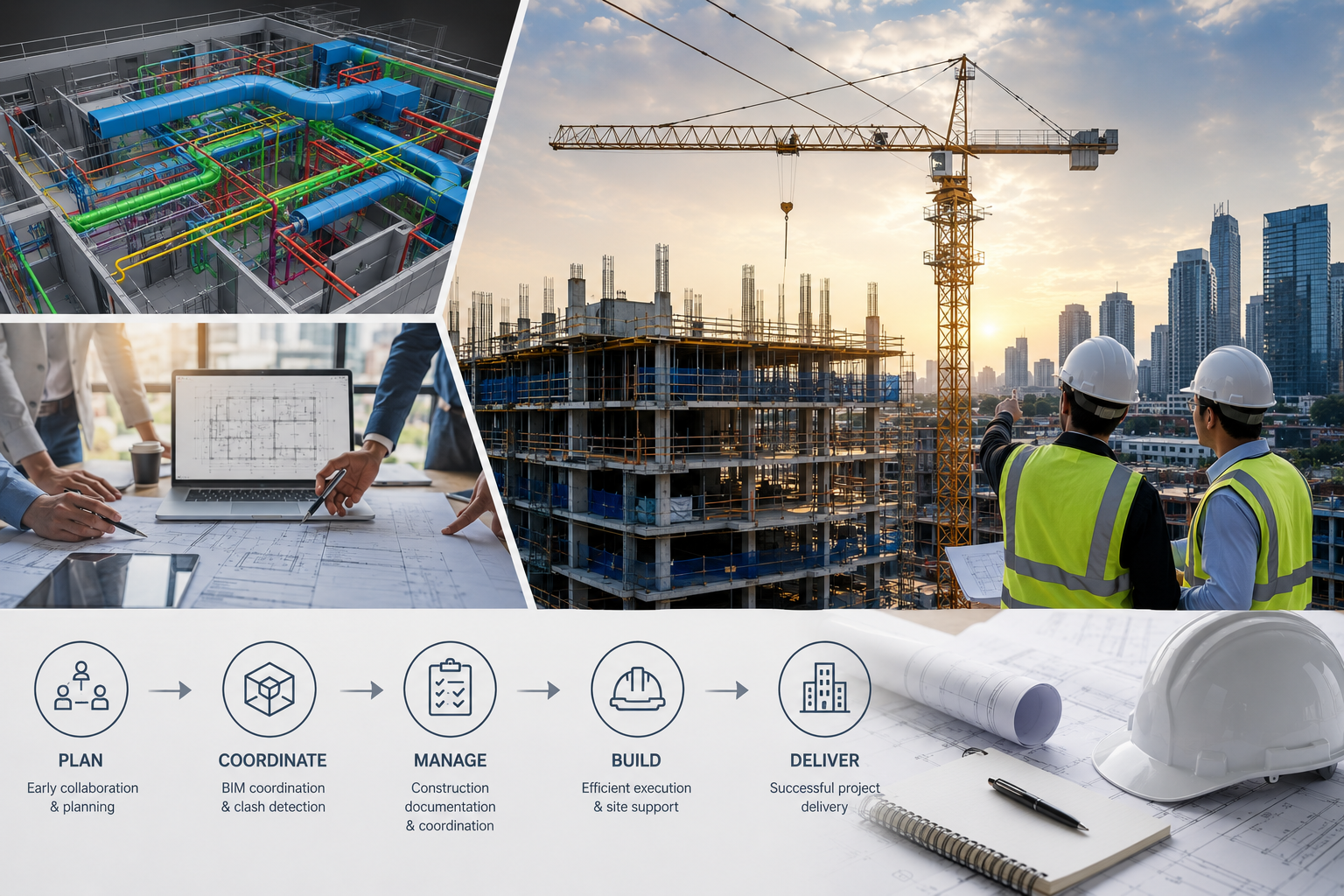
Modern construction projects involve multiple disciplines working together, including architects, structural engineers, contractors, and MEP consultants. While each discipline plays a critical role, project success often depends on how effectively these teams coordinate throughout the design and construction process.
Poor coordination can lead to delays, budget overruns, design conflicts, and costly rework. Effective construction coordination, on the other hand, helps projects move smoothly from concept to completion.
At InnoDez UK, we help project teams improve coordination through integrated MEP design, BIM workflows, and detailed construction documentation.
Why Construction Coordination Matters
As buildings become more complex, coordination between disciplines becomes increasingly important.
Without proper planning and communication, projects may experience:
- Design conflicts
- Construction delays
- Increased project costs
- Material waste
- Site installation issues
- Reduced building performance
Early coordination helps identify potential issues before they impact the construction schedule, saving both time and money.
The Role of MEP Design in Project Delivery
Mechanical, Electrical, and Plumbing systems occupy significant space within a building and must work alongside structural and architectural elements.
MEP coordination ensures:
- HVAC systems fit within available spaces
- Electrical pathways are properly planned
- Plumbing systems avoid structural conflicts
- Plant rooms are efficiently designed
- Building services remain accessible for maintenance
- Installation processes are streamlined
When MEP design is considered early, projects are less likely to encounter costly changes during construction.
Common Coordination Challenges in Construction
Many construction issues originate during the design phase rather than on-site.
Some of the most common challenges include:
Space Conflicts
Building services often compete for limited ceiling and plant room space. Without proper coordination, clashes can occur between:
- Ductwork
- Pipework
- Electrical containment
- Structural components
Incomplete Documentation
Missing or inconsistent drawings can lead to confusion among contractors and subcontractors, increasing the likelihood of errors during installation.
Late Design Changes
Changes introduced after construction begins often result in delays, additional costs, and disruption to project schedules.
Communication Gaps
Poor communication between project stakeholders can create misunderstandings that affect design accuracy and construction quality.
How BIM Improves Construction Coordination
Building Information Modeling (BIM) has become one of the most valuable tools for improving project delivery.
BIM allows teams to:
- Visualise building systems in 3D
- Detect clashes before construction
- Coordinate multiple disciplines
- Improve documentation accuracy
- Reduce rework and site conflicts
- Enhance collaboration among stakeholders
By identifying issues virtually rather than on-site, BIM significantly reduces construction risks and improves efficiency.
The Benefits of Early MEP Coordination
One of the most effective ways to improve project outcomes is to involve MEP engineers early in the design process.
Early coordination provides:
- Better space planning
- More accurate cost forecasting
- Reduced design revisions
- Improved system efficiency
- Faster construction schedules
- Fewer installation conflicts
The earlier potential issues are identified, the easier and less expensive they are to resolve.
Supporting Contractors During Construction
Construction coordination does not end when drawings are completed.
MEP consultants continue supporting projects by:
- Responding to contractor queries
- Reviewing installation requirements
- Updating design documentation when needed
- Assisting with site coordination
- Helping resolve unforeseen issues
Ongoing engineering support helps maintain project momentum and ensures systems are installed according to design intent.
Reducing Risk Through Better Project Planning
Successful construction projects rely on careful planning and proactive coordination.
Integrated design strategies help:
- Minimise project risks
- Improve construction efficiency
- Enhance communication
- Reduce unexpected costs
- Improve quality control
- Support smoother project delivery
By addressing challenges before construction begins, project teams can avoid many of the common issues that affect budgets and schedules.
Construction Coordination for Modern Developments
Whether designing residential, commercial, hospitality, healthcare, or mixed-use developments, coordination remains one of the most important factors in project success.
Modern projects require:
- Accurate engineering documentation
- Multi-disciplinary collaboration
- BIM-based coordination
- Efficient building services design
- Clear communication between stakeholders
Projects that prioritise coordination from the beginning are more likely to be delivered on time, within budget, and with fewer construction issues.
Building Better Projects Through Integrated Design
Construction coordination is about more than avoiding clashes. It is about creating a clear path from design to completion while ensuring every system works together efficiently.
Through coordinated MEP design, BIM workflows, and collaborative project delivery, developers, architects, and contractors can improve efficiency, reduce risk, and achieve better project outcomes.
InnoDez UK provides MEP design, BIM coordination, and engineering support services that help construction projects across the UK move from concept to completion with confidence.