
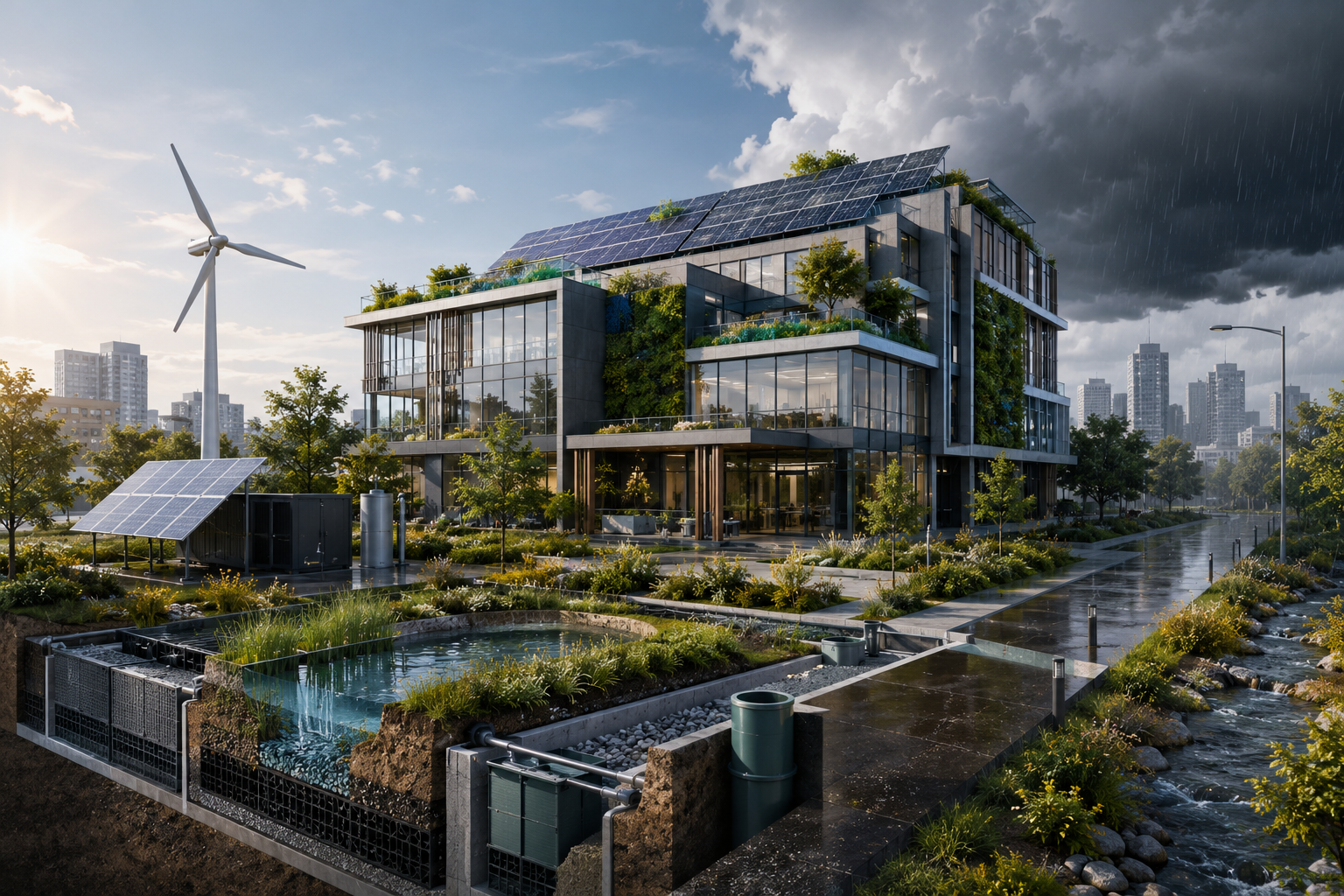
Why Climate Resilience Is Becoming Essential in Building Design
Climate change is no longer a future challenge—it is already affecting how buildings are designed, constructed, and operated. Across the UK and around the world, rising temperatures, increased rainfall, flooding, heatwaves, and severe weather events are creating new risks for the built environment.
Buildings designed using historical climate data may no longer perform adequately under future conditions. As a result, developers, property owners, and construction professionals are increasingly prioritising climate resilience to protect assets, occupants, and business operations.
Climate resilient buildings are designed to anticipate, withstand, adapt to, and recover from environmental stresses while maintaining functionality and safety.
At InnoDez, we support project teams through integrated MEP engineering and BIM services that help create buildings capable of performing efficiently in an increasingly unpredictable climate.
What Is a Climate Resilient Building?
A climate resilient building is designed to minimise the impact of climate-related hazards throughout its lifecycle.
These hazards may include:
- Extreme heat
- Flooding
- Storm events
- Heavy rainfall
- Drought conditions
- Power outages
- Water shortages
- Poor outdoor air quality
The goal of resilience is not only to protect the building itself but also to maintain operational continuity and occupant safety during and after adverse events.
Climate resilience therefore extends beyond sustainability and energy efficiency by focusing on long-term adaptability and risk reduction.
Why Climate Resilience Matters in the UK
The UK has experienced increasing climate-related challenges in recent years, including:
- More frequent flooding events
- Rising average temperatures
- Prolonged heatwaves
- Increased rainfall intensity
- Greater pressure on energy infrastructure
These changes directly impact building performance.
For example:
- Higher temperatures increase cooling demands.
- Flooding can damage critical infrastructure.
- Severe weather events can disrupt building operations.
- Increased humidity may affect indoor air quality and occupant comfort.
As regulations and sustainability targets continue to evolve, climate resilience is becoming an essential component of responsible building design.
Designing Buildings for Higher Temperatures
Historically, many UK buildings have been designed primarily for heating requirements.
However, rising temperatures are changing design priorities.
Overheating has become a growing concern in:
- Residential developments
- Offices
- Healthcare facilities
- Educational buildings
- Care homes
Strategies for Reducing Overheating Risks
Climate resilient design may include:
- High-performance building envelopes
- Solar shading systems
- Improved insulation
- Natural ventilation strategies
- High-efficiency cooling systems
- Smart building controls
Mechanical engineers increasingly use building performance modelling to predict future thermal conditions and ensure occupant comfort over the building’s lifespan.
Flood Resilience and Water Management
Flooding remains one of the most significant risks facing the UK built environment.
Even a single flood event can result in:
- Extensive property damage
- Business interruption
- Equipment failure
- Significant financial losses
Flood Resilience Strategies
Engineering measures may include:
- Elevated plant rooms
- Flood-resistant construction materials
- Sustainable drainage systems (SuDS)
- Rainwater attenuation systems
- Flood barriers
- Emergency drainage provisions
Early flood risk assessments allow project teams to develop effective mitigation strategies and protect critical building infrastructure.
Building Services Resilience
Mechanical, electrical, and public health systems are essential to maintaining building functionality.
Climate-related events can place significant stress on these systems.
Examples include:
- Increased cooling demands during heatwaves
- Power disruptions during severe weather
- Water shortages affecting operations
- Increased wear on mechanical equipment
Designing Resilient MEP Systems
Engineering strategies may include:
- Redundant systems
- Backup power generation
- Enhanced cooling capacity
- Flexible distribution networks
- Water conservation technologies
- Smart monitoring systems
Well-designed MEP infrastructure improves a building’s ability to respond and recover from climate-related disruptions.
Energy Resilience and Grid Reliability
As buildings become increasingly electrified, reliable energy supply becomes even more important.
Extreme weather events can place additional pressure on national energy infrastructure and increase the risk of outages.
Climate resilient buildings may incorporate:
- Renewable energy systems
- Battery storage technologies
- Backup generators
- Microgrid solutions
- Demand response strategies
These technologies improve energy security while supporting long-term decarbonisation goals.
Water Efficiency and Resource Management
Water scarcity is becoming an increasingly important issue, even in regions traditionally considered water secure.
Climate resilient buildings are designed to use water more efficiently through strategies such as:
- Rainwater harvesting
- Greywater recycling
- Water-efficient fixtures
- Leak detection systems
- Smart water monitoring technologies
Reducing water consumption not only supports environmental objectives but also improves operational resilience.
The Importance of Indoor Environmental Quality
Climate change can significantly impact indoor environmental conditions.
Higher temperatures and changing weather patterns may affect:
- Indoor air quality
- Thermal comfort
- Humidity levels
- Occupant wellbeing
Resilient buildings incorporate design strategies that maintain healthy indoor environments despite external conditions.
Solutions may include:
- Advanced ventilation systems
- Air filtration technologies
- Humidity control systems
- Smart environmental monitoring
Creating healthy indoor environments improves occupant comfort, productivity, and wellbeing.
BIM and Digital Technologies for Climate Resilience
Digital technologies are becoming increasingly important in climate resilient design.
Building Information Modelling (BIM) enables project teams to:
- Simulate future climate scenarios
- Analyse building performance
- Evaluate flood risks
- Optimise building systems
- Improve multidisciplinary coordination
Digital twins and smart building technologies can further support resilience by continuously monitoring performance and identifying potential issues before they become critical failures.
Designing for Adaptability and Future Change
Climate resilience is not simply about solving today’s challenges—it is about preparing buildings for future conditions that may differ significantly from those experienced today.
Future-proofing strategies may include:
- Flexible building layouts
- Expandable building services infrastructure
- Modular systems
- Additional utility capacity
- Adaptable operational strategies
Buildings that can evolve over time are better positioned to respond to changing environmental conditions and occupant needs.
Sustainability and Climate Resilience Go Hand in Hand
While sustainability and resilience are often discussed separately, they are closely interconnected.
Sustainable buildings aim to reduce environmental impact, while resilient buildings are designed to withstand environmental change.
Successful projects integrate both objectives through:
- Energy-efficient systems
- Low-carbon technologies
- Renewable energy integration
- Water conservation measures
- Durable building materials
- Smart operational strategies
This integrated approach creates buildings that are both environmentally responsible and operationally robust.
How InnoDez Supports Climate Resilient Building Design
At InnoDez, we help project teams design buildings that can adapt to future environmental challenges while maintaining high levels of performance and efficiency.
Through coordinated MEP engineering, BIM modelling, and sustainable design strategies, we support clients in creating resilient buildings that protect occupants, reduce operational risks, and deliver long-term value.
Our multidisciplinary approach enables us to develop practical engineering solutions that balance sustainability objectives with future climate considerations.
Conclusion
Climate change is reshaping the way buildings are designed and operated.
From rising temperatures and flooding to increased pressure on energy and water resources, the built environment faces challenges that require a new approach to engineering and design.
Climate resilient buildings provide a proactive solution by improving adaptability, reducing risk, and enhancing long-term performance.
By integrating resilience into building design today, developers and property owners can create safer, more sustainable, and future-ready buildings that continue to perform effectively in a changing world.